How to Lean Bulk on 3,000 Calories (Without Force-Feeding)
Struggling to eat 3,000 calories a day? Learn how to lean bulk without forcing down huge meals or relying on rigid meal plans by hacking caloric density.
⚡ TL;DR Key Takeaways
- The Force-Feeding Trap: Eating huge volumes of "clean" foods like rice and chicken causes bloating and burnout, not sustainable mass gains.
- Caloric Density Hacks: Swapping high-volume carbs for low-volume, high-calorie fats (like olive oil and nuts) lets you hit a surplus without feeling stuffed.
- Liquid Calories are a Cheat Code: Drinks bypass brain satiety signals, making 500+ calorie shakes the easiest way to close your daily caloric gap effortlessly.
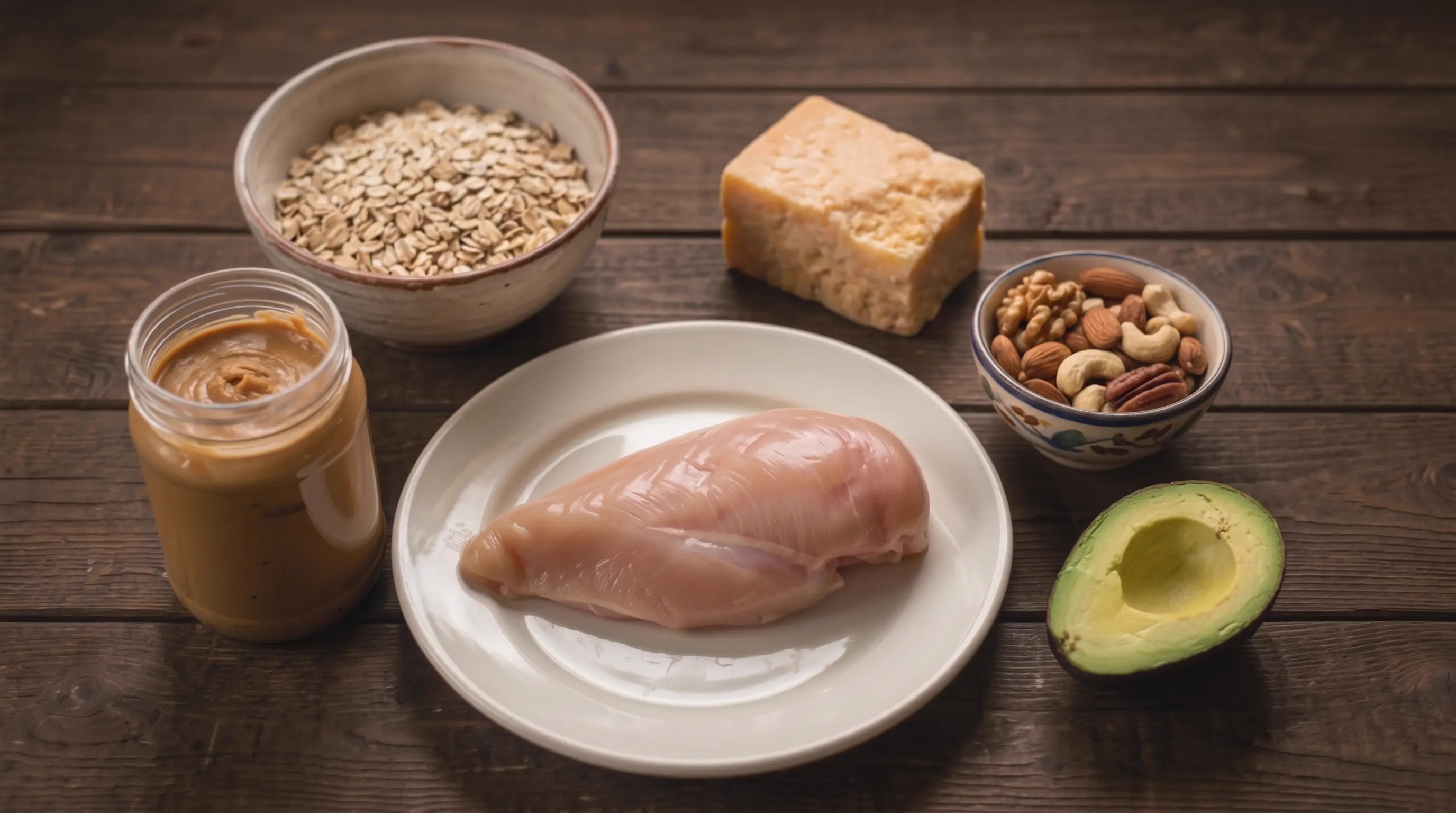
What is the force-feeding trap in lean bulking?
The force-feeding trap occurs when lifters attempt to reach a calorie surplus by consuming massive volumes of low-calorie "clean" foods (like chicken, rice, and broccoli). This rigid approach maxes out your stomach capacity, causes severe bloating, and leads to eventual diet burnout. If you are struggling to consume 3,000+ calories (which you can split using our Bulking Macro Calculator), you aren't failing because of a lack of discipline—you're simply trying to eat foods with too low a caloric density, which often leads to the false assumption that you have an abnormally fast metabolism.
How does caloric density help you eat 3,000 calories without feeling full?
Caloric density helps you reach 3,000 calories by maximizing the calorie-to-volume ratio of your meals. Because the stomach senses physical volume (via stretch receptors) rather than calories, swapping high-volume foods for fats requires less digestive space. A clinical study in the AJCN demonstrated that food volume is a major determinant of satiety, independent of calorie content.
The Fix: Swap large portions of dry carbs and greens for low-volume, high-calorie fats. A single tablespoon of olive oil or a handful of nuts adds 100–180 calories without taking up space. By incorporating these fats into existing meals, you hit your calorie targets without feeling stuffed.
| Food Item | Volume | Calories | Stomach Footprint | Caloric Swap | Volume | Calories | Stomach Footprint |
|---|---|---|---|---|---|---|---|
| Boiled Potato | ~350g | 300 kcal | 🔴 High | Olive Oil | 1.5 tbsp | 180 kcal | 🟢 Minimal |
| Broccoli/Cucumber | 500g | 120 kcal | 🔴 High | Raw Nuts | Handful (~30g) | 185 kcal | 🟢 Minimal |
| Chicken Breast | 200g | 330 kcal | 🟡 Medium | Chicken Thigh | 150g | 340 kcal | 🟢 Low |
Why do liquid calories bypass satiety signals during a bulk?
Liquid calories bypass satiety signals because they require no chewing and exit the stomach quickly. A study in the International Journal of Obesity showed that liquid calories do not trigger the same satiety responses as solid foods, making them a perfect bulking tool.
The Fix: Drink 500–700 calories instead of eating them. A shake made of whole milk, whey, peanut butter, and a banana takes a minute to consume, digests quickly, and helps close your daily calorie gap without sluggishness.
How can you analyze your diet to hit 3,000 calories easily?
You can assess your diet by tracking your natural habits for a week to identify low-friction spots where you can inject extra calories. Trying to change everything overnight is a recipe for failure. Instead, keep your normal diet and make small additions where you fall short.
Using Nulls Tracker to analyze your baseline diet helps you find easy spots to insert 200–300 calories at a time without bloating. Targeted micro-adjustments guided by real data will get you to 3,000 calories far faster than force-feeding.
Nulls Tracker helps you assess your meals and find easy opportunities to add caloric density.
Ready to Track Smarter?
Stop using diet apps to build mass. Get the tracker built for gaining.